


From the Front Page - Columns
-
Bitcoin Startups in Africa
July 18th, 2014 by William Suk
Backup below (dhimmel):
One frequently mentioned use case for cryptocurrency is as a conduit for international remittances. Currently, more than 200 million people live outside of their birth countries and these people send home over half a trillion dollars per year to relatives and friends. Money takes circuitous routes between wallets in Atlanta and hands in Accra (or the other way around). These routes are shaped by densely interlinked networks of national and international governments, laws, organizations, corporations, technologies, currencies and human relationships. This nexus of interrelated forces and actors constantly reshapes the channels through which people working abroad send money home. This column will draw attention to interesting developments in this space that have a bearing on cryptocurrency and other decentralized technologies.One company that is currently basking in the Bitcoin buzz is BitPesa, a startup seeking to enable BitCoin remittances to Kenya. BitPesa, which opened for service this month, charges a 3% fee to exchange BitCoin into Kenyan Shillings and deposit this money into a specified mobile money account.
BitPesa works seamlessly with its namesake M-Pesa, the viral electronic cash network owned by Safaricom, Kenya’s leading cellular provider. M-Pesa is like a privatized currency—users deposit money with Safaricom, and this balance is linked to their phone number. Users can then beam these funds to other people’s phones or spend them at an ever-expanding network of M-Pesa merchants. Currently M-Pesa can be used to buy groceries, pay bills, hire cabs, and much more. In fact, some reports argue that 31% of Kenya’s GDP passes through the M-Pesa network. SafariCom is now East Africa’s most profitable company and has expanded into markets around the world, spawning competitors like Econet’s EcoCash based in Zimbabwe.
BitPesa claims that users around the world will be able to deposit BitCoin onto their platform and designate M-Pesa accounts in Kenya to receive Shillings. The conversion is done automatically so recipients in Kenya receive the money on their cellphones within minutes. Recipients do not require a BitCoin address or need to worry about market volatility. Senders, on the other hand, must find their own ways to buy BitCoin, although BitPesa has online tutorials about how to do this. Importantly, it should be noted that the fees associated with acquiring BitCoin are not included in BitPesa’s 3% calculation.
BitPesa is not currently available in the United States, likely due to stringent American restrictions on international money transfer. It is, however, available in the United Kingdom where I will be traveling tomorrow. Is there a reader from Kenya who would be willing to help me test the BitPesa system? Please let me know ASAP in the comments section or in the forums and I will use the service to send you a small amount of BitCoin.
BitPesa is a good example of a company using BitCoin to cash in on the business of sending money from “rich” countries to “poor” countries. Kitiwa, on the other hand, is a notable BitCoin startup based in Ghana that works the other way around. Kitiwa allows people in Accra to buy BitCoin with local currency in order to make online payments and send money abroad. This service is needed in Ghana because payment networks like Visa and PayPal routinely block people living there (and in other African countries) from using their systems.
Kitiwa users begin by opening a BitCoin address, and the Kitiwa website contains a tutorial on using Blockchain.info to do this. Users then then pay for BitCoin with MPower Payments, a Ghanian mobile payments startup that allows people to fund purchase with their bank accounts, credit cards or mobile money accounts. Users can then use their BitCoin to pay for internet services like web hosting, send money to relatives living abroad or hire overseas consultants. The Kitiwa website even has a tutorial on how to use BitCoin to shop on Amazon.com through Gyft.
These developments in Africa’s BitCoin ecosystem occur just as banks in the United States are pulling out of the remittance business. Laws aimed at money laundering and the financing of terrorism have increased costs for banks, which are responding by axing services. As Michael Corkery recently reported:
“JPMorgan Chase and Bank of America have scrapped low-cost services that allowed Mexican immigrants to send money to their families across the border. The Spanish bank BBVA is reportedly exploring the sale of its unit that wires money to Mexico and across Latin America. And in perhaps the deepest retrenchment by a bank, Citigroup’s Banamex USA unit has now closed many of its branches in Texas, California and Arizona that catered to Mexicans living in the United States and stopped most remittances to Mexico as it faces a federal investigation related to money laundering controls.”
In a recent op-ed the New York Times argued that banks’ move away from the remittance business will result in migrants paying higher fees to send money home, and that a possible solution would be for the World Bank to act as a centralized remittance clearinghouse. Many BitCoin enthusiasts are probably hoping that the opposite happens—that the banks' withdrawal will create openings that can be filled by BitCoin startups like BitPesa and Kitiwa. We will see what happens.
Read More -
Blockchain Bootstrapping Resource based Economy
July 14th, 2014 by Alchemi
ADAM's NOTE: PLEASE EDIT THIS COPY FOR THE TEST
Summary- Differentiation of the blockchain from proof of work to proof of resource.
- Advantages of a resource based economy.
- Disadvantages of a consumption based economy.
- Examples of resource based crypto-currencies.
What is Proof of Resource?
The Bitcoin network is built on Proof of Work, which is based on an algorithmic assymetry: valid hashes are computationally easy to verify but difficult to create. The vast processing power devoted to mining consumes electricity and therefore the bitcoin network is resource-backed.
Downsides of the proof of work model such include the cost of maintaining the network and centralization of the asymmetric processing power. However instead I would like to discuss the upside which is long term impact of blockchain technology on the economy.Resource Based Economy vs Consumption Based Economy
The concept of resource-based economics was developed by Jacque Fresco through his Venus Project in 1995.
The Venus Project is an organization founded by Jacque Fresco that advocates for what it calls a resource-based economy. The goal is to combine Fresco’s versions of sustainable development, energy efficiency, natural resource management and advanced automation in a global socioeconomic system based on social cooperation and scientific methodology.
Jacque Fresco’s work focuses only on natural resources of the planet such as minerals, natural gas and oil. However in the internet era, the scope of resources goes beyond natural resources of the planet. In a decentralized computer network resources include processing power, storage and network bandwidth. In any given community, resources include member skills, software development, availability of tools, and content produced.
Since our current economy is based on the equilibrium between production and consumption, perpetual growth is only possible with perpetually increasing consumption. In other words, for growth to never reverse or cease, consumption must eventually become infinite. As inflation is baked into the very core of the growth pattern of this economy model, it is like a tornado that feeds itself anything on its path. Among this model's destructive consequences are peak oil, depletion of natural resources, and ever increasing pollution.
Transition from division of labor which is Proof of Work by humans to Proof of Resource has already begun. Division of labor was advocated by Adam Smith in The Wealth of Nations. Thanks to the innovation of Blockchain, the technology is moving towards transforming centralization and corruption into decentralization, transparency and accountability at all levels.
One of the main advantage of Proof of Resource model is that it is based on deflation rather than inflation. This is because the resources do not and cannot be inflated to infinity. Gold or any mineral mining are very good examples of this model. By implementing the Proof of Resource in a decentralized system we are making sure the resources are not controlled by few but managed by the people based on group consensus.The Blockchain enables the group consensus and empowers the people on a grass roots level.
When we observe how nature operates, we can infer that the natural world conserves resources by reducing, reusing and recycling them. The planet powers itself by with plants that photosynthesize rather than combust fossil fuels. The planet’s ecology does not operate under the premise of inflation but is guided by the principle of conservation.
Resource based Crypto-Currencies
Proof of Resource model is implemented in some of the crypto currencies such as LTBcoin and SolarCoin. These are backed by resources such as community produced content and production of electricity through solar energy.
Why is LTBcoin Proof of Resource based?
Proof of Publication and Proof of Participation are the basis of LTBcoin. This model considers content produced by the community as a resource. The end users, who are the consumers, earn coins by participating in the community and enhancing the content through Proof of Participation. The distribution of LTBcoin for the next five years is as follows.
- 60% of LTBcoins will be distributed to members who publish content on the LTB Network
- 25% of LTBcoins will be distributed to members who are the end users
- 10% of LTBcoins will go towards the maintenance of the platform
- 5% of LTBcoins will go towards administration
The main advantage of this model is that group concencus is required to control the discussion. This makes subtle censorship less likely than on sites like reddit or slashdot.
Solarcoin
SolarCoin is backed by two forms of proof of work. One is the traditional cryptographic proof of work associated with digital currency. Another proof of work is a 3rd party verified meter reading. SolarCoin is equitably distributed using both of these proofs of work as a means to reward solar energy generation.
SolarCoin is the first renewable energy currency and also a resource based coin as it is backed by production of solar electricity. One solarcoin is rewarded to the producer of 1 megawatt of electricity.
Read More
DisclosureThis article is meant for informational purposes and is not an endorsement. Articles published on the LTB network are the author's personal opinion and do not necessarily represent the opinions of the LTB network.
Further Readinghttp://www.youtube.com/watch?v=KphWsnhZ4Ag#t=13
http://www.youtube.com/watch?v=jsV_3yBDXXI
https://en.wikipedia.org/wiki/The_Wealth_of_Nations
http://www.hashcash.org/
http://wiki.solarcoin.org
http://solarcoin.org/news/ -
Can Bitcoin change from a bubble economy into a growth economy?
June 16th, 2014 by Tim Swanson
-
PoliTIK - An Accountable Representative Decision Making & Leadership System
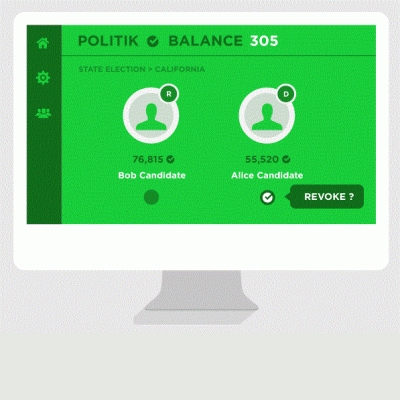
May 14th, 2014 by Adam B. Levine Originally published at Humint Labs When we talk about Bitcoin or cryptocurrency, it is usually in the context of money. Sometimes it is in the form of stake, but this stake is usually acquired through some work or for funds donated. Politik is a system which recasts the metaphor of token from Coin to Voice - the ability to influence an outcome by making your “voice” heard. This contrasts with the systems of the world today, voting is a process of the very slightly larger group... Read More
-
Something's Not Right at 'Gox
February 26th, 2014 by Charlie Shrem What in the world is going on at MT GOX? After last nights wild episode we told you the party wasn't over, and here's the next installment in the ongoing drama. Things move fast in the world of Bitcoin and today LTB is pleased to present an interesting email, curated by Charlie Schrem describing some possible hypothesis for the trouble at MT GOX Read More
-
MTGOX is Sulking
February 24th, 2014 by Adam B. Levine If you can't be a shining example, at least be a horrible warning. MTGOX is doing the hard thing, hair aflame so you and I can learn the lesson. It's not the first time and it's painful for everyone involved every time, so lets hope this one sticks. LTB Editor Adam B. Levine submits this editorial on the reason behind the silence at MTGOX Read More -
Service with a (Virtual) Smile!
February 9th, 2014 by Hayden Gill In the world of Bitcoins, we can win the loyalty of merchants, banks, countries and consumers by learning from the late Steve Jobs's example. Does this mean we should, even the Android and PC users amongst us, become masters of media and cult-like figures of unflinching devotion? Please. LTB Columnist Hayden Gill submits this piece. Read More








2,148 views